Wednesday, January 18, 2017

How Does an Internal Combustion Engine Work?

This week, we are learning about internal combustion engines with hands on a 1967 Jaguar E Class.  These are some of the websites we visited to gain a foundational understanding of engine basics.


1967 4.2L Jaguar, 
4 stroke, 
naturally aspirated, 
triple carburator, 
Straight 6


Image result for 1967 jaguar 4.2 l engine


How a Car Engine WorkS


Engine animation


How Car Engines Work on HOW STUFF WORKS

CARBURATORS: Study diagram       Image result for CARBURETOR

Sunday, January 15, 2017

Aerodynamics


AERODYNAMICS

Long road trips can be excellent opportunities for learning.  Besides the endless discussions, questions raised by circumstance, exposure to new places, new territories, the teacher has a captive audience (haha ;).  We talked in depth about distances (math) and fuel usage.  We dealt with an uncooperative roof storage bag which raised question of fuel efficiency.  We passed countless 18 wheelers and felt the wind resistance as we passed.  We also felt the lack of wind resistance when temporarily following behind a semi (drafting).  We had many questions that we explored the answers to below...

Introduction to AERODYNAMICS:  Click Link


WikipediaWikipedia- DRAFTING (aerodynamics) Click link

Why do we care about aerodynamics?

FUEL ECONOMY is one reason to care.
How to Choose a Cargo Box for Your Vehicle 

Efficiency, Competition and Fun is another.
How to Draft on a Bike


NOTE: Drafting with vehicles is DANGEROUS and DO NOT DO IT, here is why>>>>>>
Dangers of Drafting


Car Aerodynamics Basics and How-To Design Tips


Friday, January 13, 2017

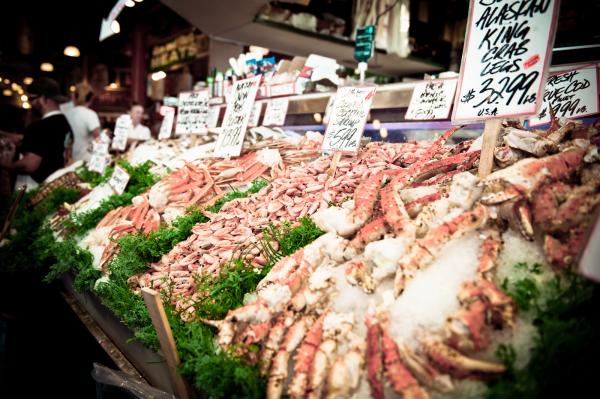
Washington State History, Pikes Place Market


Pikes Place Market

by Baron Molo for Washington State History Project Requirement


NOTE::::::This is a work in progress until it is final.


Seattle was booming in the late 1800's and early 1900's with the Gold Rush and many immigrants moving in.  Gold rushers, loggers, fishermen, shipbuilders, farmers and merchants, Japanese and Italian immigrants came to the city.  Pikes Place Market opened August 17, 1907 with just few farmers selling their produce.  Today it is one of the most famous markets in the United States and many tourists visit Pikes Place Market year round.  It is the oldest famers market still in business in the nation.

Pikes Market became one of the best places to shop for food during the Great Depression because they had the least expensive food around.  So in that time of the 1920's and 1930's it grew because lots of people where able to sell things to make money. However, in 1942 the market lost more than half of its farmers who were Japanese, because they were put into immigrant camps during World War II.


Pikes place market used to be the cheapest place to shop for the locals but in 1907 many of the people that sold at the market bought from farmers that sold them the product for very cheap prices and then the sellers shot the prices up and profited more than double what they got it for. They are called wholesalers and were doing what is called price gauging. Price gauging is a way people made extra money and ruined the market. For example, the price of onions went from $.10 to $1.00 a pound!  But the people of the city did not like that so they changed the rules and made the farmers sell direct to the people.

Even now Pikes can be one the most expensive places to shop but despite the higher prices on some things, the merchants do sell the most wonderful fresh produce, fish and flowers. It is known to be one of the most popular tourist spots with over 10 million visitors a year and most of them tourists.  They come because it is historical and fun.


Pikes Market is not just a place to go buy food, it is a place to go have a good time!  Lots of the merchants like to entertain the people and drawing attention to their shop or stand makes them more successful. Such as the fish markets, they interact with the public, they like to shout and throw fish and crabs across the room which can be pretty funny. Others like to hand out samples so that people can taste what they have and hopefully buy it.


1970 was put on the National Register of Historic Places.
1971 Starbucks opens its first coffee shop.


Map of Washington
Seattle is located in the north west corner of the state.  Seattle is located in the Puget Sound and is the capital of the state. Pikes Market sits in the heart of Seattle and has a rich and interesting history.  

Wednesday, September 17, 2014

Homeschooling Poetry and Shakespeare

This year, we started off with poetry and continue to move headlong into it.  From King Arthur and the Idylls of the King (depicting 5th/6th centuries) to Shakespeare's (16th century), A Midsummer Night's Dream, we are working our way through the complexities of old English. We are using the following resources and teaching sources:
History/Backround Life in 17th Century (mature)
Teaching Unit
Writing Style

Once again, I find it interesting how a collage of learning will come together when homeschooling.  For example, we started on the path of poetry studies for ELA and found detours opening up like investigating history when looking at King Arthur's legendary existence in the 5th and 6th centuries.  From there, questions came up asking, What is a century?  What does BC,AD,BCE, CE mean?  Questions like these take us briefly off the path which can feel frustrating until you realize, these are very valid points of interest and represent things we need to know.  We, as adults, take much of our acquired knowledge for granted but as teachers, we need to step back and allow for these detours and know that it counts.  But weren't we studying ELA? Yes, but then history and life present.  

Another example of 'homeschool magic' occurred when someone in our FB support group posted an opportunity for 7-12th grades to attend a 10 week Shakespearian actors workshop where students will study and perform, A Midsummer Night's Dream.  How perfect!  I quickly claimed a space for Niah and promptly made adjustments to our ELA path so that we could start understanding this play.  We weren't finished with Idylls of the King, but for the greater good, we put it on the back burner for now.  Niah is happy about that as she really doesn't like it.  I don't think she cares for Shakespeare at this moment either but hopefully, this course will open her mind.  After all, a very experienced USC Professor is teaching and is sure to light Niah up.  
Shakespeare at The Mermaid Tavern
  

Fairies were very popular in this time period.    


"Elves of hills, brooks, standing lakes and groves;
And ye, that on the sands with printless foot,
Do chase the ebbing Neptune, and do fly him
When he comes back; you demy-puppets that
By moonshine do the green-sour ringlets make
Whereof the ewe not bites," &c.,

Edwin Landseer 1802-1873

Love looks not with the eyes, but with the mind,
And therefore is winged Cupid painted blind.
Nor hath Love's mind of any judgment taste;
Wings and no eyes figure unheedy haste.”


Friday, September 12, 2014

BC, AD, CE, & BCE


Notes to self:

BC=before Christ AD=Anno Domini (Latin) for, in the year of the Lord.
There is no zero year-1 BC is the year before AD 1.
Now days, because of political correctness, CE, Common Era, is used for AD and
BCE means, Before Common Era and is used instead of BC, Before Christ. 


Thursday, September 11, 2014

King Arthur - Idylls of the King by Alfred Lord Tennyson (1859-1892)

King Arthur is a legendary British leader of the 5th and 6th centuries which is (401 to 599 years AD). Some people who study history, believe he never lived. People believe he never lived because, the only way we know about him is from folktales and legends. 

Idylls of the King is a very long narrative poem written in blank verse and each line contains ten syllables, and is a non-rhyming poem. 
Notes to self:

BC=before Christ AD=Anno Domini (latin) for, in the year of the Lord. 
There is no zero year-1 BC is the year before AD 1. 
Now days, CE, Common Era, is used for AD 
BCE means Before Common Era is used instead of BC Before Christ


   Settings


History


Geography 

Characters

King Arthur, Sir Lancelot, & Guinevere 

Guinevere & Sir Lancelot
Merlin
         

Update Record

DAY6-17:
Khan Math, mostly review, reducing fractions, adding, subtracting, multiplying, dividing decimals,
Khan Science- cardio vascular system, You Tube videos on system showing how red blood cells move throughout the body, life cycle of red blood cells, crossword and QA worksheets on cells- Prokaryotic and Eukaryotic.
Observed and discussed ocean tides, storms and waves, ocean temp variables, drought
Writing-started Sleeping Beauty as myth assignment
Social Studies- Watched The Butler (civil rights movement)
Life Studies- travel across US on airplane, mapping, mph, travel systems, navigation, how to work with TSA, getting around airports ie Atlanta, GA with its concourses, arrival/departure listings, subway system, baggage weights and dimensions, time schedules, tail and head winds, and lots of  people watching!

DAY18:
ELA Read part of Idylls of the King by Alfred Tennyson
Spelling (25 words for the week)
Khan Science - cell path video
Khan math- decimals, fractions; Saxon Math review; Circles

DAY 19:
ELA - Idylls of the King reading cont'd, discussed setting, characters
Math- Saxon, two-step equations, order of operations,
Life Studies - discussed Laws of Supply and Demand as we compared the products offered in California vs S. Carolina.  Demand for organic products is greater in CA therefore more products offered for sale in the market.  Also discussed water supply, water rationing, drought, and its effect on potential water cost, rationing, etc.
WHA- timeline studies, perspective for studying World History
Social Studies- King Arthur
Writing- edit and update blog profile to reflect higher academic standard
Music: Guitar practice and lessons

APPLE (Free Verse Poem)

                                                                 Apple                                                                                                                                                                                                            

                                                                                                                                                  Niah
                                                                                                                                                  8-21-2014
This assignment began as a creative writing exercise to get the mind moving.  We had read a couple of poems to start and then she wrote her first draft.  From that draft, we worked to develop the poem, expanding and fine tuning.  We did not apply too many rules, making a choice to flow with ideas and playful word expression. FREE VERSE

1.  Apple
2.  The sweet, sweet flavor,
3.  The crunchy texture
4.  And the bright red skin

5.  Oh the things it see's!
6.  He started as a little flower,
7.  Bloomed into a wee green fruit 
8.  That changed into the most beautiful red beauty. 

9.   He became who he was!
10.  Little Old Man came and picked him off his tree.
11.  Little Proud Apple was carried in a little round basket, off to Little Old Man's Little Sweet Wife. 
12.  She lovingly makes snacks for her little sweet grandchildren. 

13. The day came and she plucked that little proud apple from the basket,
14.  Sliced him in to little pieces, 
15.  Divided him up for her little sweet grandchildren. 
16.  Filled with joy, " This is the best apple ever!" the children squeeled.  Oh the things they did say!

17.  Oh, what a life that little apple had!
18.  He saw the seasons change, the birds, the trees, the big bright moon, the nice hot sun, and so much more!
19. The little proud apple knew his adventure wasn't over just yet! 

20. He left his 7 little seeds with the world! Oh, the things they will see!
                                                            The End   

Thursday, August 21, 2014

SCHOOL START: 2014/2015 180 Days for 7th Grade

Hello!

The school year kicks off with the addition of a new Mac Air 13" laptop for Niah.  Only the finest technology for my little one (wink ;)! Sparring no expense, mainly due to the fact we are 'MAC People' and they've got us! Oh well.  But MAC computers are truly the finest learning tools available especially if you are into the Arts.  Niah absolutely loves the device and takes very good care of it.  It also acts as a leveraging pawn, in that she must comply with our expectations in order to keep it.

That being said...

DAY 1:  kicks off with
Computer Technology work.  Organized desktop for quick navigation to important websites and online resources.  Dashboard includes Khan Academy, our Blog, Curriculum links to other Math and ELA, etc.  Also created folders for her work and practiced saving files to folders.  Internet safety discussed.  Expectations covered.
Day 1 also included getting started with Saxon Math Placement testing.

DAY2: Easy Peasy (EP) Day 2,
reading (Hope has Wings) poem, respond to questions and writing.
Expanded Apple poem.
Saxon Math (SM) placement testing,
World History for us ALL (WHA)- discussion on how to study history.  Blind men and the Elephant analogy.  Studying history from 3 perspecitves: Panoramic, Landscape, Up CLose.  She illustrated an elephant (Landscape) with a micro-bubble window showing skin and hair follicles (Close Up), and African continent (Panoramic).


DAY3: Finished SM Placement, ready for 8/7.
Maleficent came in mail as Niah wanted to read the book.
We discussed the 'Sleeping Beauty' theme and learned about it's origins dating back to the 1300's, then again in the 1600's with Perrault (French) and Brothers Grimm (Germans).  There have been many adaptations of this story throughout the years with some of the most disturbing versions found in its earliest emergence by Perrault.  Walt Disney, a man with a darkside, of course, made this story popular in the 1959 Sleeping Beauty animated movie.  Today's Maleficent maintains  much of it's 'Walt Disney' elements but expands and spins off on its own with new elements.
In studying the story from a myth-perspective, we discovered it contains nature symbolism which I will let Niah explain in the next blog entry titled, 'Myth Analogy of Sleeping Beauty'.
Finished Lesson 1 of WHA- mapping
Khan- Human Body part 1

DAY 4:
ELA -EP, Read poem, The Second Day Before Christmas, discussed and responded to questions.  Keyboarded in the Apple Poem importing edits from written draft while using correct posture. Learned the history of proper notations, as found in the APA, and how the technological advancement of word processing allows us to italics vs underline and using quotation marks.  This a part of technological evolution.  However, not everyone has crossed over and instructors will have students use underlines and quotations.   Streamlining grammar rules, making writing easier.
Khan-Math @ 5% of 7th grade mastery
Khan Science - Cells

DAY 5:
Khan-Math GCF LCM; WHA Lesson 2; ELA Shakespeare Sonnets- discussed how the English language evolved, how poetry is used to express deep love (in contrast to the degradation of love expression in todays world as seen on Instagram, 'Hey! You are awesome! Follow me!" or 'You are hot', etc.

ORIGINAL TEXT

MODERN TEXT:

My eyes work best when I’m asleep, because all day they look at things I don’t care about. When I sleep, my dreaming eyes alight on you and glitter brightly in the dark, having found your bright image there. Given that your shadowy dream-image brightens even the dark, how bright might you appear in daylight, when your own light is so much clearer? How bright, when your shadow shines so brightly to my eyes blinded by darkness? What good would it do my eyes to see you in the daytime when they already look at your beautiful image in the dead of night, as I sleep? Every day is as dark as night until I get to see you again, and every night is as bright as day when I see you in my dreams.

When most I wink, then do mine eyes best see,
For all the day they view things unrespected;
But when I sleep, in dreams they look on thee,
And, darkly bright, are bright in dark directed.
Then thou, whose shadow shadows doth make bright—
How would thy shadow’s form form happy show
To the clear day with thy much clearer light,
When to unseeing eyes thy shade shines so?
How would, I say, mine eyes be blessèd made
By looking on thee in the living day,
When in dead night thy fair imperfect shade
Through heavy sleep on sightless eyes doth stay?
  All days are nights to see till I see thee,
  And nights bright days when dreams do show thee me.


Friday, August 15, 2014

Sedona Rocks! Adventures in the WEST! A Geological Study

Key words: Sedementary Rock, Sandstone, erosion, iron oxide, igneous,
Co-Authored by Niah and Baron
This picture was taken from our hotel.  Great views!  At night, Sedona has a low light policy so you can see the stars really well.  We swam and looked at the stars.  Bats flew all over the pool swooping down to the surface of the water for bugs that were attracted to the pool light.

This a picture (above) was taken when we were at this really cool hiking trail where you could see several of the enormous rock formations that make Sedona famous.  It is hard to believe there was an ocean here and the earth pushed up the layers and erosion has exposed so many years of earth’s history.  


This is a picture of
Slide Rock which is
in a park in Sedona, AZ.  The rocks are sandstone and with moss all over, it makes it very slippery.  After the water has run through the canyon for so long, it cut the rock into a narrow path.  The process is called EROSION.  The path cut by the water is perfect for sliding because it is smooth and the water pushes you down the river.


This picture (below) shows sedimentary rock.  The huge rock formations show many layers including limestone that contains fossils from an ancient ocean.  Under the sedementary rock, there is also igneous (from magma and lava - fast or slow cooling) and metamorphic (heat and pressure).  Picture below show crystals that formed as geodes within the rock which may show that there was water in the area.
The rocks of Sedona are red from Iron Oxide.


Monday, December 16, 2013

Scientific Method


http://science-fair-coach.com/scientific-method/
 Wathc video here:

The SciShow

Bill Nye the Science Guy 
When heated, water vaporizes.  When cooled, it returns to liquid.  See can crushing experiement.

Friday, November 22, 2013

MATH and Moving: Why is it Important to Know Your Calculations?

Fallbrook to South Carolina:    2,400 miles

Scenario:  Driving a truck that gets 13/19 mpg (rate)

Take the average by choosing median (halfway between 13 and 19) which is 16mpg.

Then DIVIDE the total numbers of miles by the average miles per gallon (mpg):

2400/16= 150       150 is the number gallons of gas.

Now, MULTIPLY 150 (gallons needed to drive 2400 miles) X $4 (price per gallon of gas)

150X4= $600  $600 is the amount it will cost to drive 2400 miles.


Finally, the company will pay $.56 per mile. New problem! How much will the company pay us to drive our truck to South Carolina?

MULTIPLY:  2400 (the number of total miles) X $.56

2400 X .56 = $1356  $1356 is the amount CBI will pay us to drive the truck.

Now, if it costs us $600 in gas to drive the truck and the company pays us $1356, how much is left over?

SUBTRACT: Smaller from the Larger  $1365 - $600 = $756
$756 is how much extra money we will get to drive our car.

Please note:  When you drive a car or truck, it costs more than just gas.  You must consider that the tires get worn, the oil gets dirty, we pay insurance on the vehicle, and so on.


From: Fallbrook, CA To: Columbia, SC

Tuesday, October 8, 2013

The New World

We are watching the new movie recently released, 'The New World'.  Very good so far with excellent cinematography- everything, well done.

This movie really helps you envision what it was like when the colonist first arrived to the Americas.  Imagine what the Natives thought.  How sad for them because the European arrival marked the end of their existence.


Friday, October 4, 2013

LIFE IN EARLY CALIFORNIA

LIFE IN A SPANISH MISSION: We did a free form study on the subject.

Life in Spanish Mission.  Exercises for kids to sample lifestyle of Monks as they live a day in a life. Organized schedule, tending to agriculture, prayer, hymns, cooking, cleaining, grinding grains,  etc.  Practice silence during tasks.  Link here for more info:  SpanishMission

“The monk’s prayer did not, however, end at sundown. The entire monastic community was awakened after midnight for the most de- manding period of prayer, which lasted for at least two hours. Much of the period was spent singing.”
Monks haircuts were done to symbolize their dedication to Christ.
CHANT:  Listen while you cover this lesson.
http://www.youtube.com/watch?v=Ye-HAS7NUrE
48 minutes of music including bells intro.
Les Cloches means Bells

‘In most monastic churches a choir helped lead the chanting of prayers. Until about the year A.D. 800, church music held to an early Christian tradition of being a purely sung, or vocal, music. This type of vocal music is called plainchant. It did not include in- struments and had a style that consisted of melody alone, without accompaniment. Sometimes plainchant is called “Gregorian chant”, after Pope Gregory I, a scholar and a church leader. Gregor- ian chants are very simple melodies sung in Latin, which communicate the beliefs of the church.’
San Luis Rey Mission
California’s ECONOMY and How it Changed When the Spanish Came:

Hunter-Gathering to Agriculture and Farming
Missions used the labor of the Native Americans and organized agricultural practices and produced food and goods not only to sustain themselves but also to use for trade.
Note the clothing style with Spanish and Western migration infuence.
Scholars believe there were 10-over 100 million natives in the Americas before Columbus came.  Then they started to die with the period sometimes called, 'The Great Dying' which occured when the Europeans (Spanish) brought diseases.  The Natives didn't have immunity to the sicknesses so millions died. 


Sunday, September 22, 2013

Food Chains, Food Webs, and Bioaccumulation

Food Chains, Food Webs, and Bioaccumulation

This week we have been studying food chains, webs, producers, consumers, herbivores, carnivores, omnivores.  We did a project as a work sample here:


Snakes and school. We sure had to learn hard lessons owning this snake. He eats cute creatures. Anyone want a snake?


After school on Monday, we went to our favorite beach where we observed the tide pools.  We witnessed the food chain in action in everything including the Pelicans diving like Kamakazis into the water to fetch fish while opportunistic seagulls fought to steal their catch.  


So CUTE!!!!!

'You are so Beautiful! You are smart like Tuna!' That's what the starfish tell her. The are the true suck ups! But they only speak the truth. 


We saw octopus, many species of sea stars, and sea slugs, and ruffled 'things' that were indescribable!  We saw real sea monkies!  It is so amazing what one can learn from the world around them!!!

We are struggling in mountains of paperwork assigned by out school and it is eclipsing our ability to get out and learn the lessons found through hands on, real time interaction with the sources.  Though I TRYYYYYYYY!!!


OK.... so, instead of going over the same material, I decided to expand it by having the kids do a bioaccumulation activity.  Here is the link to the game:  TRACING TOXINS


This is what Niah does with hers.